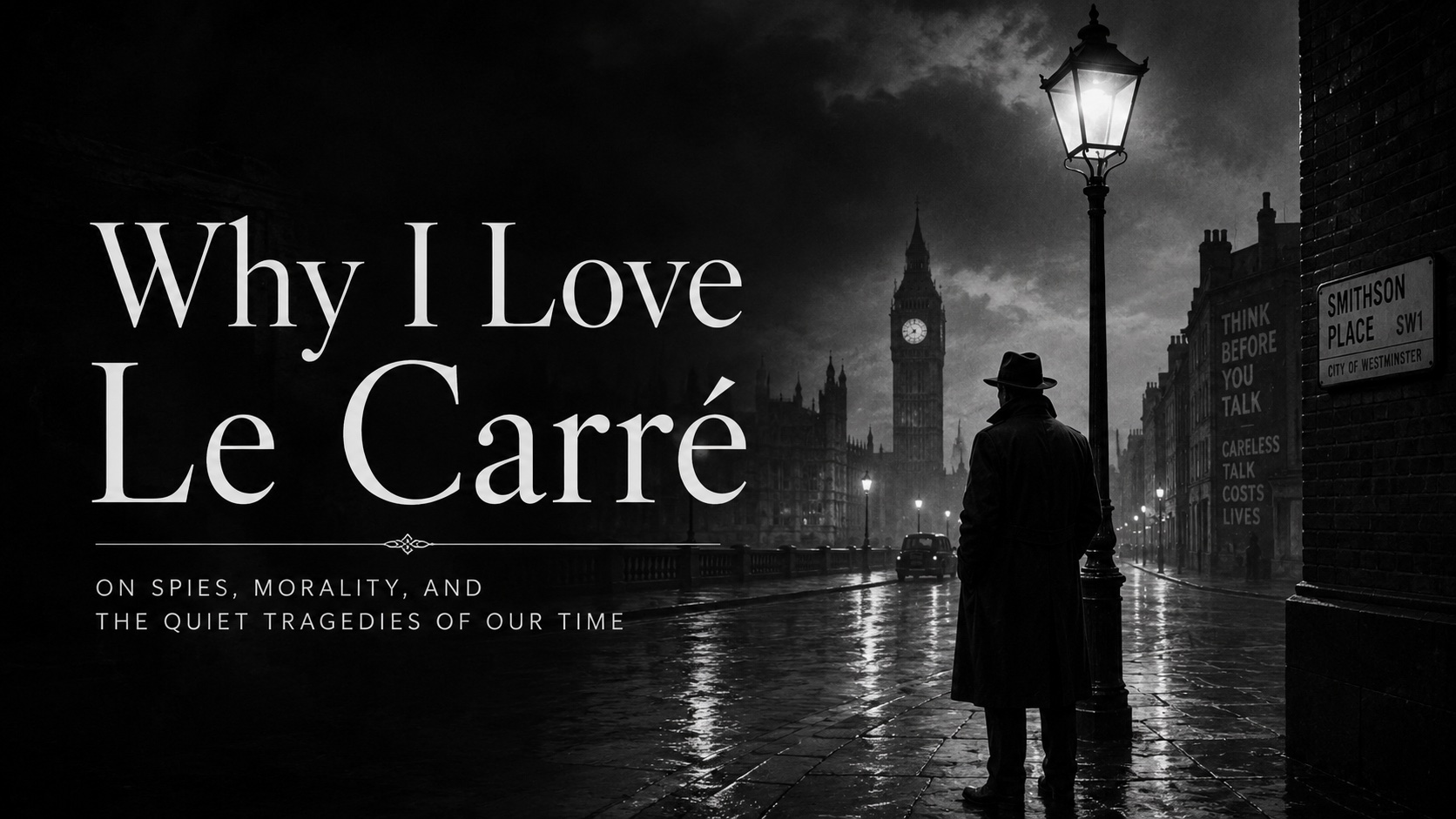
Why I Love John le Carré
Written by Damian Vargas
I have always had a weakness for stories where the most dangerous thing in the room is not the gun, the bomb, or the man in the expensive coat standing too close to the window.
It is the lie.
That, for me, is why John le Carré still matters.
Not just because he wrote spy novels. Not just because he gave us George Smiley, the Circus, Karla, moles, dead drops, safe houses, betrayals, watchers, watchers watching watchers, and all that deliciously grim machinery of the Cold War. He matters because he understood something far more interesting than espionage.
He understood people.
More specifically, he understood people under pressure. People pretending. People wearing masks so long they forget where the mask ends and the face begins.
A recent BBC Culture article explored how le Carré’s spy novels were shaped by his con-man father, Ronnie Cornwell, and that feels absolutely right to me. Once you know that, you can feel it humming beneath the floorboards of the books. The secrets are not just political. They are domestic. Emotional. Familial. The first intelligence service in le Carré’s world was not MI5 or MI6. It was the family home.
That is a chilling thought. Also, let’s be honest, a very British one.
I grew up in England in the 1970s and 1980s, when the Cold War was not history. It was weather. It was there in the background, like damp in the walls. You did not necessarily understand it as a boy, not properly, but you felt it. The Russians were over there. The Americans were over there. Somewhere, men in grey suits were deciding whether the rest of us got to continue eating fish fingers and watching telly.
There was a strange fascination to it all. Nuclear warnings. News reports. Berlin. Moscow. Defectors. Men with umbrellas who might not only be carrying umbrellas. It was frightening, yes, but also oddly theatrical. The world seemed to be divided into visible life and hidden life. School, football, shops, tea, rain — and underneath it all, tunnels.
Le Carré opened the trapdoor.
What I loved, and still love, is that his secret world was not glamorous in the Bond sense. There were no villains stroking cats in volcano lairs. No laser watches. No silk-shirted psychopaths explaining their masterplan beside a shark tank.
His world was shabby offices, tired marriages, bad coffee, old loyalties, files, compromises, institutional dust. It was England with the lights turned down. The wallpaper peeling. The empire gone, but not quite buried. The old boys still playing games with other people’s lives because that was what old boys had always done.
And then there were the characters.
George Smiley remains one of fiction’s great acts of misdirection. On the surface, he is almost aggressively unimpressive. Middle-aged. Polite. Wounded. Frequently underestimated. The sort of man a waiter might ignore and a fool might dismiss. But inside him there is a furnace: intelligence, patience, grief, moral seriousness, and a capacity for ruthless action that is all the more powerful because it arrives without swagger.
I love that.
As a thriller writer, I admire anyone who can create tension without constantly kicking the furniture over. Le Carré was a master of the slow burn. He could make a conversation feel like a duel. He could make a pause dangerous. He could make a man reading a file feel like someone defusing a bomb with cold fingers.
That kind of tension asks something of the reader. It says: lean in. Pay attention. Watch the hands, not the mouth.
There is a lesson in that for anyone who writes suspense. Speed is useful. Violence has its place. A chase can be wonderful. I’m certainly not against a good punch-up in a bad alley. But tension is not the same as noise. Often, the thing that truly grips us is the sense that something is wrong and everyone in the room is pretending not to notice.
Le Carré understood that better than almost anyone.
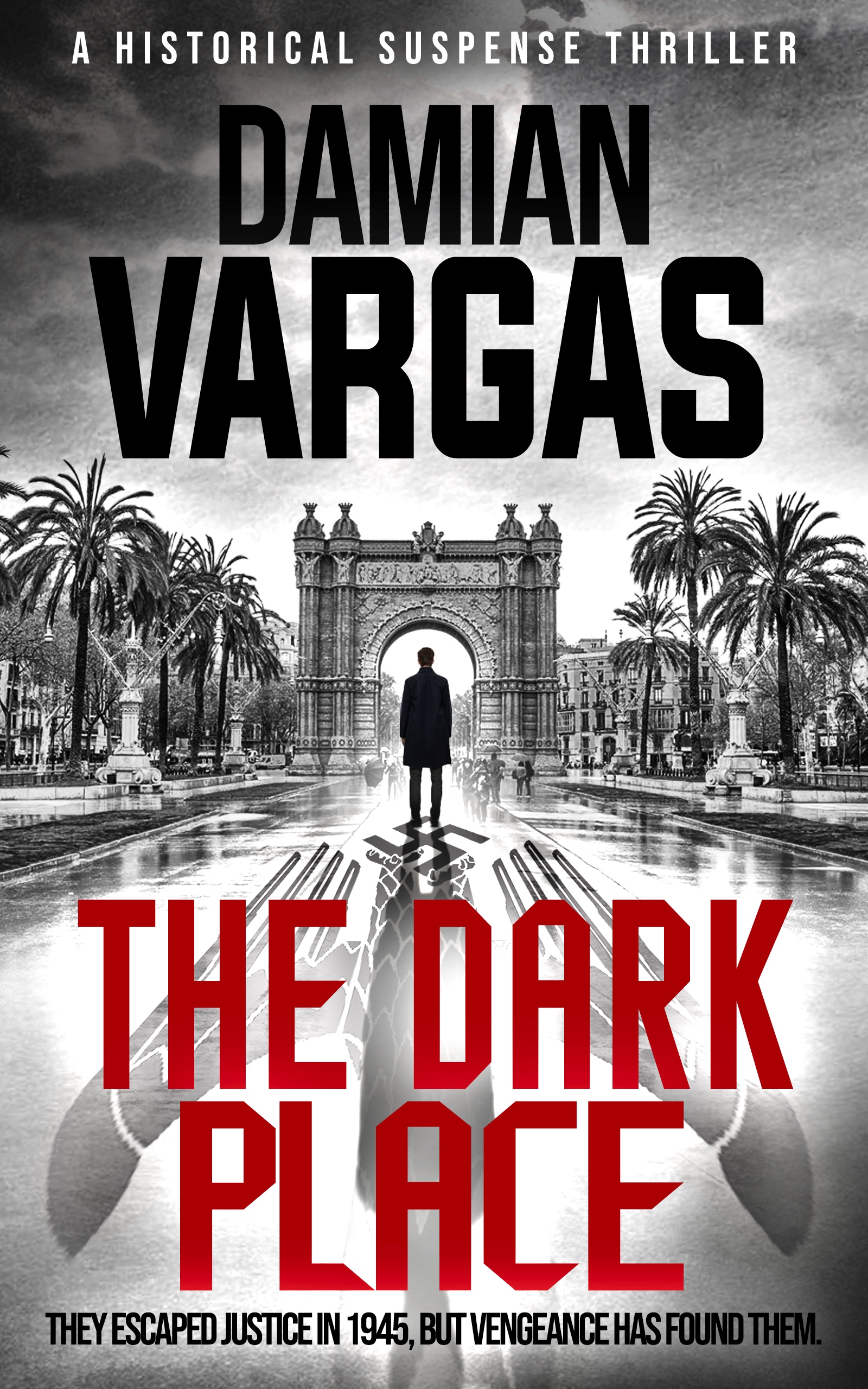
I tried to draw upon those lessons in my own book, The Dark Place.
He also understood moral mess. His books are full of people trying to do the right thing inside systems that have misplaced the definition. That is why they still feel modern. The flags change. The enemies change. The technology changes. But the central question remains horribly fresh:
How much of yourself can you compromise in defence of something you claim to believe in?
That is not just a spy question. It is a life question.
Perhaps that is why le Carré’s novels never feel like museum pieces to me. Yes, they belong to the Cold War. Yes, they smell of wet pavements, cigarette smoke, train stations, embassy corridors, and wool overcoats. But the heartbeat is current. Betrayal. Loyalty. Class. Love. Shame. Institutional arrogance. The stories we tell ourselves so we can sleep at night.
As a boy, I was drawn in by the mystery of it all. The coded world beneath ordinary England. The sense that adults knew terrible things and were doing an excellent job of not mentioning them.
As an adult, I stay for the humanity.
For the damaged people. For the difficult choices. For the grim little jokes. For the way le Carré could make a bureaucrat terrifying, a traitor sympathetic, and a quiet man in spectacles more compelling than any action hero with a licence to kill.
If you have never read him, start somewhere cold and let the chill do its work.
Do not rush.
Let the fog gather. Let the room go silent. Let the polite man in the corner finish listening.
That is where le Carré gets you.
Not with the explosion.
With the truth that arrives afterwards.