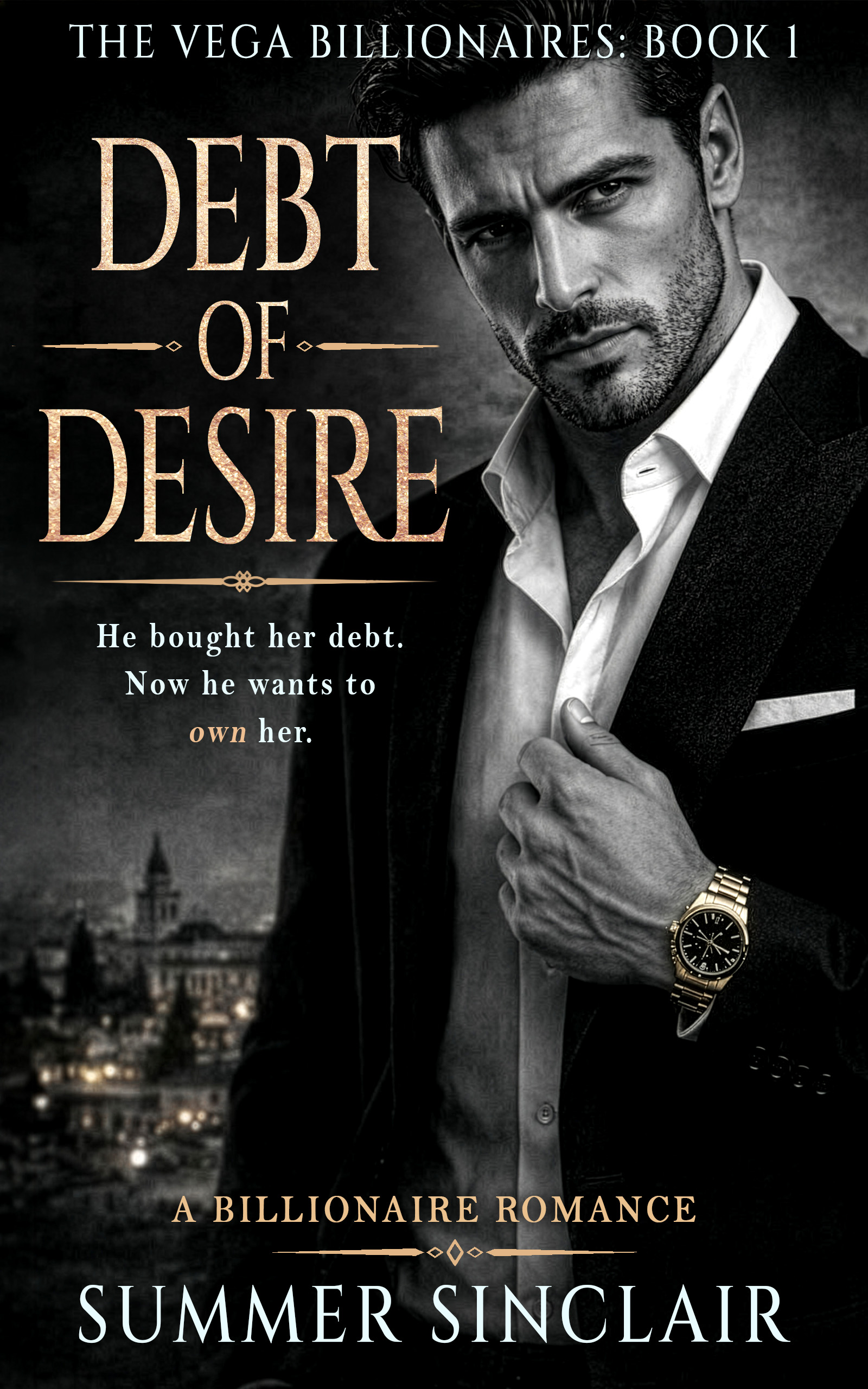
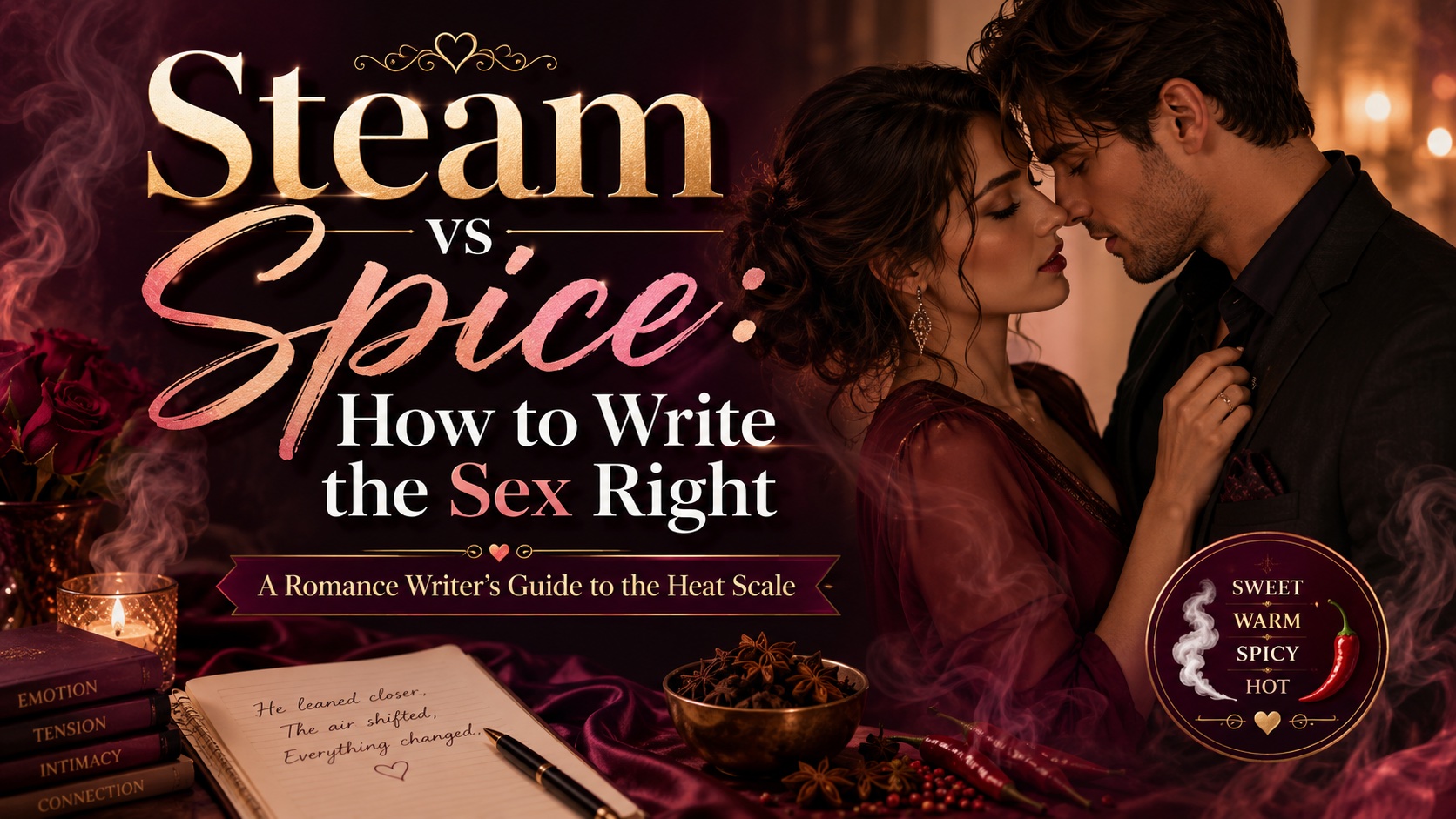
Steam vs Spice: How to write the sex right
Written by Summer Sinclair
The first time someone asked me about my book's "heat level," I panicked. Not the graceful, heroine-in-distress kind of panic that leads to being swept off your feet by a brooding billionaire. No, this was the ugly kind—the sweaty-palms, deer-in-headlights panic of someone who'd just realized they'd been writing blind.
"Is it steamy or spicy?" the book blogger asked, fingers poised over her keyboard like a surgeon with a scalpel.
I stared at her. Steam. Spice. What was this, a goddamn cooking show?
Turns out, in the romance world, these aren't just random adjectives tossed around by readers with too much time on their hands. They're the secret language that determines whether your book ends up in the hands of someone seeking a gentle flutter of the heart or someone hunting for literary porn that'll melt their Kindle.
Steam and spice—both are just fancy ways of saying "how much fucking happens in your book," but with the kind of euphemistic politeness that lets us all pretend we're discussing literature instead of masturbation material. There's no official rulebook, no Romance Writers' Association heat-level certification program. It's all delightfully subjective, which means you can write a scene where your heroine gets thoroughly debauched in a carriage house and still have readers argue about whether it's "steamy" or "spicy."
Here's what I've learned from my years of accidentally misleading readers and getting burned in reviews: the difference matters. A lot.
Know Your Audience (Or: How to Avoid One-Star Review Hell)
Picture this: sweet romance reader picks up your book expecting hand-holding and chaste kisses. Chapter twelve hits, and suddenly she's reading about anal beads and dirty talk that would make a sailor blush. She's not just disappointed—she's traumatised. And she's about to leave a review that starts with "WARNING: NOT WHAT I EXPECTED" in all caps.
On the flip side, imagine the spice-loving reader who grabbed your book based on that sultry cover and steamy blurb, only to discover that your steamiest scene involves a passionate kiss that fades to black faster than a Victorian maiden's virtue. They feel cheated. Lied to. And they're going to let Amazon know about it.
Genre expectations are a cruel mistress. Historical romance readers expect a certain... delicacy. Even when your Regency duke is railing the governess against the library wall, he's probably not going to grunt, "Yeah, take that dick, baby." (Unless you're writing for a very specific niche, in which case, more power to you.)
Contemporary romance readers, especially those raised on BookTok's diet of unhinged praise for "spicy" books, want different things. They want characters who actually communicate about sex like real humans do. They want steam that fogs up their phone screen and dirty talk that makes them clutch their pearls while simultaneously reaching for their vibrator.
Then there's the age thing. YA romance readers get a kiss and maybe some heavy petting before we slam that bedroom door shut like protecting their innocence is our sacred duty. New Adult gets a bit more leeway—think fumbling college hookups with slightly less clinical terminology than full adult romance. And if you're writing inspirational romance, you better keep things so clean you could read them aloud at Sunday service.
The publishing houses have their own rules too. Harlequin's different lines run the gamut from "sweet enough to give you diabetes" to "so hot you'll need oven mitts to turn the pages." Know where you're aiming, or you'll end up in the literary equivalent of bringing a knife to a gunfight.
The Heat Spectrum: From Cupcakes to Five-Alarm Chili
Let me break down the heat levels in terms that won't make you sound like a pretentious ass at a writers' conference:
Sweet/Clean Romance: The Hallmark Special
These books are like that friend who still uses euphemisms for body parts. Sex? What sex? We don't know her. The steamiest thing that happens is a lingering kiss that makes both characters weak in the knees, followed by a tactful fade to black or a complete avoidance of the bedroom altogether.
I once read a clean romance where the heroine's idea of rebellion was holding hands without gloves. The sexual tension was built entirely around whether they'd kiss before marriage. And you know what? It worked. There's something to be said for the power of anticipation, for letting your reader's imagination do the heavy lifting while you focus on emotional intimacy.
Mild/Warm Romance: Dipping Your Toe In
This is romance with training wheels. You get some kissing, maybe some groping over clothes, but when things start getting serious, someone's phone rings or there's a convenient interruption that saves us all from having to deal with actual nudity. It's like sexual edging for literature.
The characters acknowledge that sex exists and they want it, but we're not sticking around to watch. Perfect for readers who want just a hint of spice without having to explain to their book club why they're reading about throbbing members and aching cores.
Steamy/Sensual Romance: Opening the Door
Now we're cooking. The bedroom door is open, and we're invited in for the show. You'll get descriptions of skin and sighs, maybe some creative uses of silk ties or ice cubes. The language stays pretty, even poetic—"he entered her" instead of the more blunt alternatives.
This is where most mainstream romance lives. It's hot enough to get your blood pumping but euphemistic enough that you won't die of embarrassment if someone catches you reading it on the subway. The focus is still on feelings and connection, just with the added bonus of watching your characters actually do something about all that sexual tension.
Spicy/Hot Romance: The Door Is Gone
Forget doors—we've blown out the whole wall. These books don't just acknowledge sex; they celebrate it in vivid, unapologetic detail. Multiple sex scenes, creative positions, dirty talk that would make your grandmother faint. The gloves are off, literally and figuratively.
This is where characters start using words like "cock" without blushing, where you get play-by-play descriptions that leave nothing to the imagination. But here's the key: it's still romance. The sex serves the relationship, even if there's enough of it to constitute a small pornographic novel.
Erotic Romance: Kindle-Melting Territory
Welcome to the big leagues, where the sex isn't just part of the story—it IS the story. Multiple explicit scenes, kink exploration, language that would make a porn star proud. If you removed all the sex scenes, you'd be left with a pamphlet.
But don't mistake this for mindless smut. Good erotic romance still has character development, emotional arcs, and that all-important happy ending. It's just that the journey there involves a lot more orgasms and creative use of household objects.
Writing Sex Scenes Without Dying of Embarrassment
Here's what they don't teach you in creative writing class: writing sex scenes is hard. Not just emotionally—though the first time you type "throbbing cock" in a Word document, you'll want to die—but technically. How do you make it hot without being ridiculous? How do you avoid writing like a medical textbook or a horny teenager's diary?
First rule: Commit to your heat level and stick with it. Don't start sweet and suddenly pivot to hardcore bondage in chapter fifteen. Your readers will get whiplash, and not the good kind.
Second rule: Match your language to your audience. If you're writing for readers who blush at the word "penis," don't suddenly drop "pussy" like it's a perfectly normal Tuesday. But if you're writing spicy contemporary, don't dance around with flowery euphemisms that make sex sound like a Jane Austen novel.
I once read a romance where the author called the hero's erection his "manly sword of desire." I laughed so hard I snorted coffee through my nose. Don't be that author. Unless you're writing comedy, in which case, carry on.
Third rule: Remember that bodies are weird. Real sex is messy, awkward, and sometimes involves funny noises. Your characters don't need to be porn stars who never get tired, never need lubricant, and achieve simultaneous earth-shattering orgasms every single time. A little realism goes a long way.
Fourth rule: Emotion is everything. The hottest sex scene in the world falls flat if it's just a catalog of body parts and positions. Why are they having sex? What does it mean to them? How does it change their relationship? The physical description is just window dressing for the emotional core.
Fifth rule: Consent is sexy. I don't care what heat level you're writing—make sure everyone involved is enthusiastically on board. Nothing kills the mood like wondering if someone's about to file charges.
One Scene, Three Ways (Or: How Word Choice Changes Everything)
Let me show you exactly how heat level transforms a scene. Same setup: longtime friends finally giving in to years of sexual tension. Watch how the execution shifts:
Sweet Version: Sarah's heart hammered as Michael brushed a strand of hair from her face. "I've wanted to do this for so long," he whispered, before pressing his lips to hers in a kiss that tasted like coming home. They held each other in the moonlight, and for the first time in years, everything felt right.
Aww. Sweet, romantic, and about as sexually explicit as a Disney movie.
Steamy Version: Michael's mouth was warm against Sarah's neck, his hands skimming her curves like he was memorizing them. When he lifted her onto the kitchen counter, she gasped at the cool marble against her thighs. "You sure about this?" he asked, and she answered by pulling him closer, feeling the hard length of him through his jeans. Their clothes disappeared in a blur of eager hands and breathless kisses. When he finally slipped inside her, they both groaned at the perfect fit.
Now we're cooking. Explicit enough to get the pulse racing, but still pretty enough for mainstream consumption.
Spicy Version: "Fuck, Sarah," Michael growled against her throat as she ground against his hard cock through his jeans. "You're killing me." She bit his earlobe, delighting in the sharp intake of breath it earned her. "Good," she whispered, and then she was shoving him toward the bedroom, her hands already working at his belt. By the time they hit the mattress, they were both desperate, all pretense abandoned. Michael buried his face between her thighs, his tongue doing wicked things that made her arch off the bed and curse his name. When he finally thrust into her, hard and deep, Sarah dug her nails into his shoulders and demanded more.
And there's the difference. Same emotional beats, completely different reading experience.
The Brutal Truth About Heat Levels
Here's what I wish someone had told me when I started writing romance: there's no wrong heat level. Sweet romance isn't "prudish" and erotic romance isn't "slutty." They're just different flavors for different palates.
Some readers want the emotional satisfaction of a love story without explicit details. Others want to live vicariously through characters who have the kind of mind-blowing sex they wish they were having. Both are valid. Both sell books.
The key is knowing what you're selling and delivering on that promise. If you promise sweet and deliver spicy, you'll get burned. If you promise fire and deliver a birthday candle, your readers will feel cheated.
And for the love of all that's holy, please include some kind of heat warning in your blurb or on your website. Not because sex is shameful, but because readers have preferences and they deserve to know what they're getting into.
Final Thoughts (Or: How to Stop Worrying and Write the Sex)
Writing sex scenes still makes me slightly uncomfortable, even after years of practice. There's something deeply vulnerable about putting your characters' most intimate moments on paper and then asking strangers to pay money to read them.
But here's what I've learned: readers want authenticity. They want characters who feel real, who have messy emotions and imperfect bodies and sometimes say the wrong thing at the wrong moment. Whether you're writing a gentle kiss or a scene that requires tissues (for multiple reasons), write it honestly.
Don't try to write the heat level you think will sell—write the heat level that feels true to your story and your characters. Readers can tell when you're faking it, and not in a good way.
And remember: someone, somewhere, is going to hate your sex scenes no matter what you write. Someone will think they're too tame, too explicit, too unrealistic, too vanilla, too kinky. You can't please everyone, so focus on pleasing yourself first.
Now stop overthinking it and go write some fictional people falling in love. Whether they keep their clothes on or not is entirely up to you.
Just maybe warn the rest of us first.