
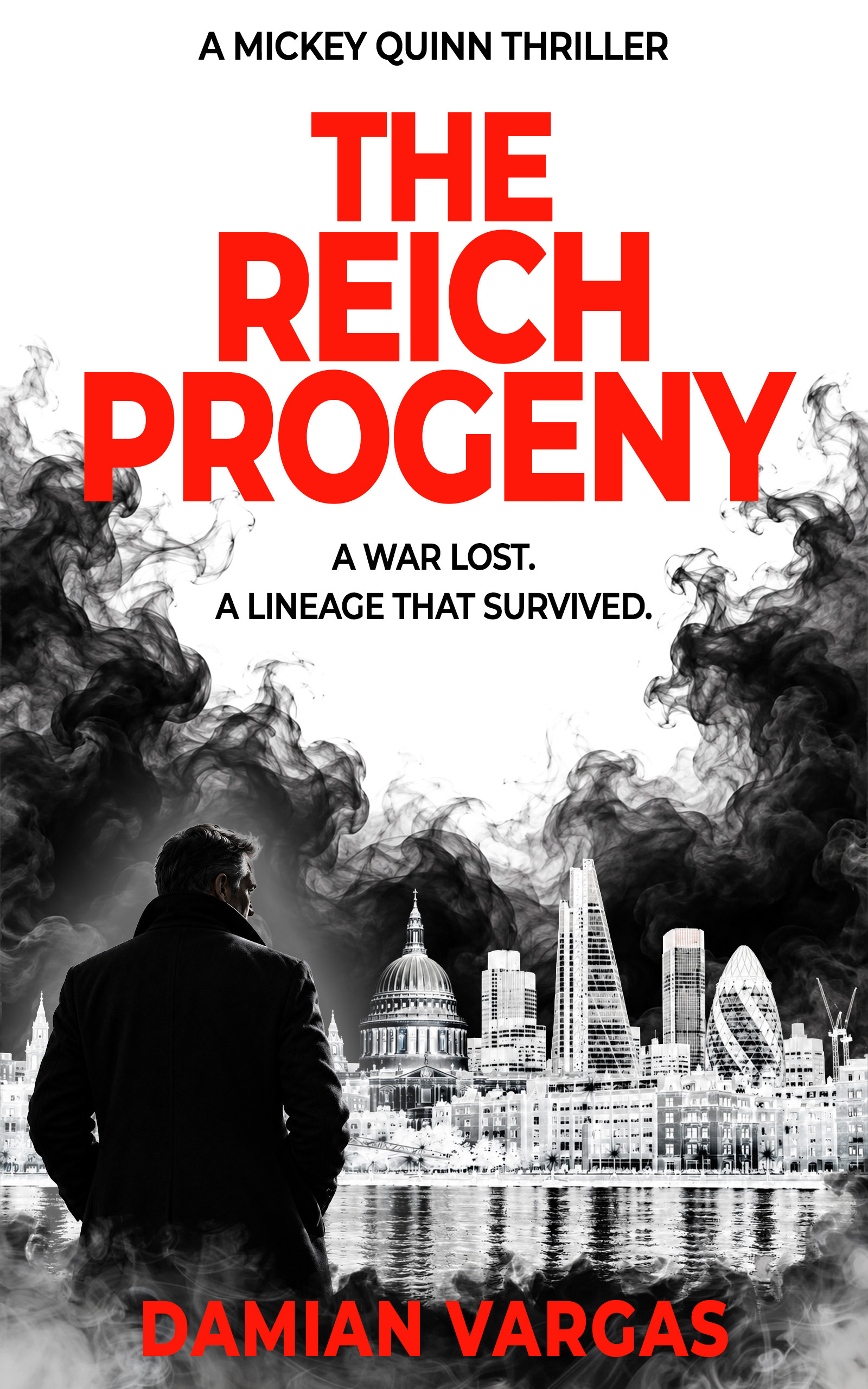
I have been reading about the Second World War for as long as I have been reading at all.
As a boy in the seventies it was Battle Action and Victor on the floor of the front room, and whatever war film was on television that weekend. The novels came next: Sven Hassel, Leo Kessler, Heinz Konsalik, Jack Higgins, Alistair MacLean, all mud and cordite, and then the quieter, colder writers who followed the war into the decades after it. Frederick Forsyth. John le Carré. And Len Deighton, who remains my favourite writer in any genre.
Somewhere along the way the fiction turned into history. Cornelius Ryan, Antony Beevor, Stephen Ambrose, Nicholas Rankin, Ben Macintyre, and hundreds of others, along with more documentaries and podcasts than I could list. If you ask me for my favourite films I will give you The Odessa File, A Bridge Too Far, The Guns of Navarone, The Eagle Has Landed and Where Eagles Dare, and then I will keep going until you stop me.
My last book, The Dark Place, was my first attempt to write in that territory, with a story that ran from the end of the First World War to 1970 and mixed the history of the war with the espionage of the Cold War that came out of it. But there was a book I had wanted to write for longer than that: a story set in the present day, with roots running back to the collapse of the Third Reich and to the men who escaped it, and who never stopped wanting it back. Ira Levin’s The Boys from Brazil and Forsyth’s The Odessa File planted that idea in me decades ago. Moving to Spain in 2015 fed it. This country sheltered more former German soldiers and war criminals than most people realise, and once you start noticing the stories you find them everywhere.
The Reich Progeny is my attempt to bring the two halves together: the history and the mythology on one side, and the pacing of a modern conspiracy thriller on the other. It is not a book of car chases and explosions. I wanted the patience and the plotting of Forsyth and Deighton, the sense that the ground is moving under the characters before anyone can see it, brought into the world we live in now.
That meant giving the old villains new tools. Nazis in cellars, biding their time, are part of the story. But what interested me was what such people might build if they had seventy years, money, and no need to hurry: new ways to reach inside people’s heads, not one at a time, but at scale, and to tilt the course of events in their favour without anyone noticing a hand on the wheel.
It also meant finding the right man to put in their way. I wanted a protagonist from outside Britain, with something of the old hard-boiled detective about him: worn down, beaten about the edges, long past expecting the system to protect anyone but itself, and resigned to never getting a clean shot at the people who actually run things. Then given one. I can’t remember where the idea of a Boston Irish cop came from, but the moment Mickey Quinn arrived I knew he was the one. There is a resilience in the Irish, a stubbornness and a quickness, that suited the man I needed.
The ideas in this book are big. I hope the story is small enough to feel, told through Mickey’s eyes and in Mickey’s head, where the pain and the losses are personal, and the conspiracy above him is only ever half seen. That was the aim. Whether I managed it is for you to say.
Thank you. It means the world to me that you read this book. Since I was a child I have entertained myself by constructing stories. I do it on planes and trains, in cars, on beaches, in dull meetings and, frequently, to get to sleep. Making up stories, building worlds and the people who live in them, has always been a pleasure for me. That is why I write, and it is why having someone read to the end matters as much as it does.
Please help me by posting an honest review of this book on the store you bought it from, or on Goodreads. It will only take you a few minutes, but it will help me immeasurably.
And do drop me a line by email, or reach out on Facebook or Instagram, if you want to tell me what you thought of this or any of my other novels. I appreciate all feedback.
Thank you for reading. Mickey will be back.
Damian Vargas