
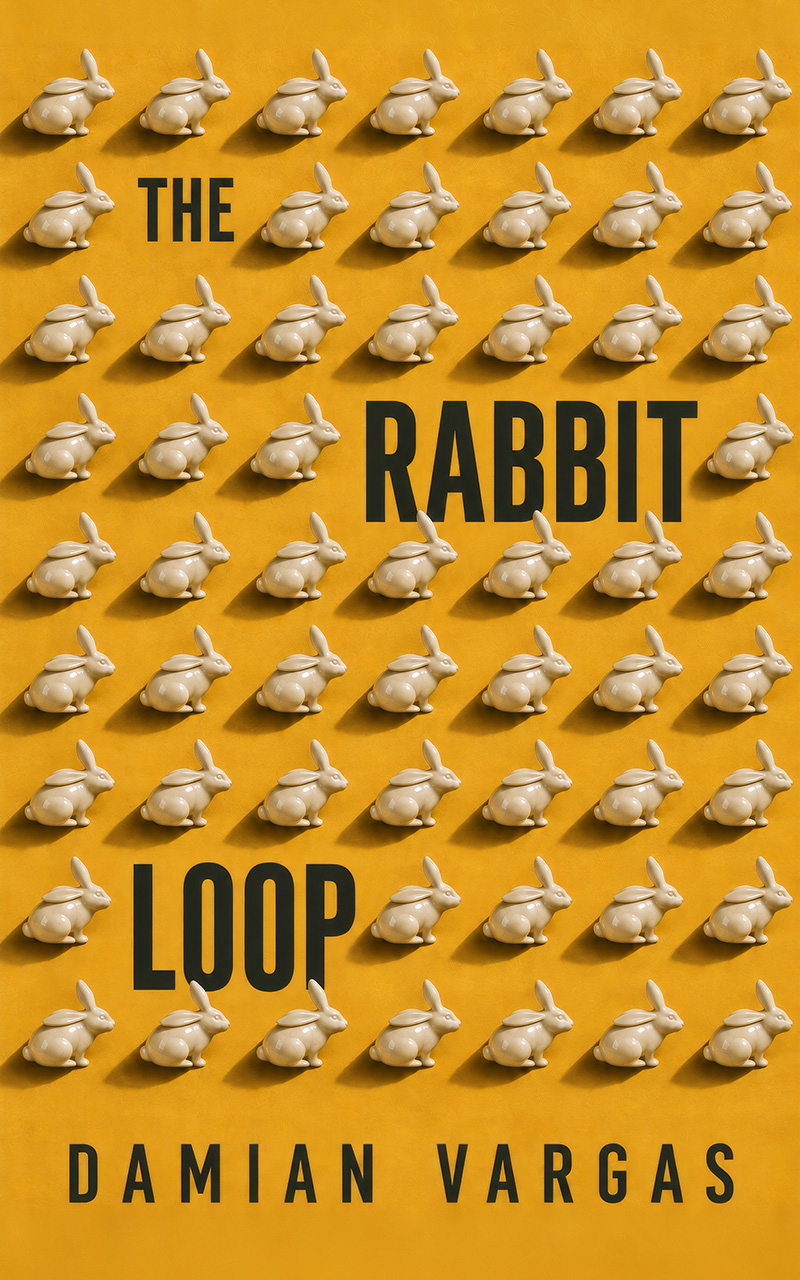
This book began with a question that my curiosity box refused to leave alone: what if you discovered that everything you did at work was being undone in the room next door? I liked the absurdity of it. Then I started thinking about how much of our sense of worth comes from being useful, and it became rather less funny.
The Rabbit Loop brings together things that have fascinated me for half a century: strange worlds, unreliable realities, institutions with impeccable explanations, and people who begin asking the wrong questions. Asimov, Philip K. Dick, Douglas Adams, John Wyndham and Joseph Heller have all helped furnish that corner of my mind. Douglas Coupland brought another kind of recognition: the loneliness, absurdity and unexpected tenderness of lives organised around work and technology.
More recently, Severance and Black Mirror have fed that fascination. The familiar workplace made quietly alien. A clever arrangement whose consequences become horribly personal. That moment when you understand the rules and wish you didn’t.
I wanted to explore that unease in a short, contained story. A room, a conveyor belt, a voice overhead. People who know exactly how to do their jobs and very little about why they are doing them. The System’s language mattered to me. Almost everything it says sounds reasonable. Most of us have encountered a reassuring announcement that made us feel considerably less reassured.
But Ward and Ellis became the reason I wanted to finish it. Their small jokes, their irritations, the care disguised as ordinary assistance. I wanted the affection to be there long before either could name it. There is something painfully recognisable about assuming there will always be a better moment to tell someone how you feel.
Then there is the rabbit. An ordinary object, handled carefully, passed along. I liked the thought that something so small could make an entire arrangement impossible to believe in.
I have deliberately left questions unanswered. The characters cannot see the whole of their world, and I wanted us to share that limitation. I hope the ending gives you something to carry away without settling everything on your behalf.
Thank you for spending this time with Ward and Ellis. Please consider leaving an honest review wherever you bought the book, or on Goodreads. It helps other readers find it and means a great deal to me.
And do get in touch. I would particularly enjoy hearing what you made of that last moment.
Thank you for reading—and for being curious.
Damian Vargas